Serum, Cream or Balm: Choosing a Texture for the Moment
Serum, cream or balm: match a product’s feel and spread to the moment in your routine, from a quick morning layer to a slower evening finish.
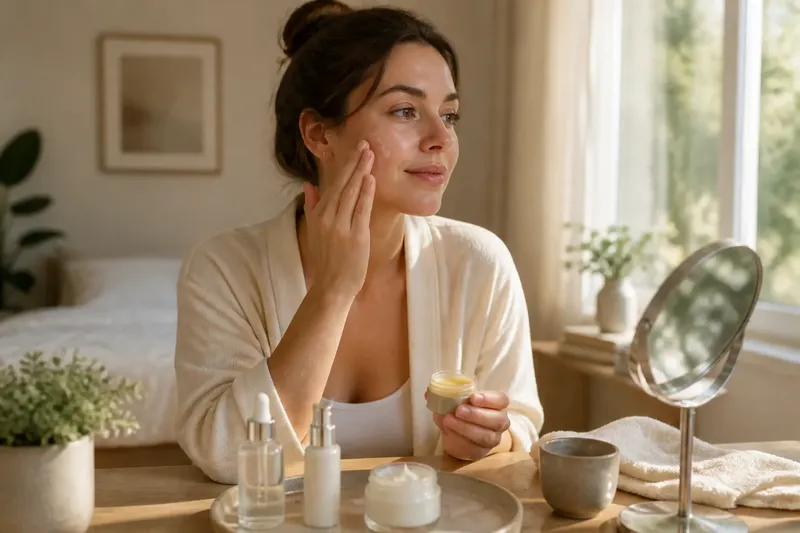
The common mistake with serum, cream, or balm is choosing by the label alone, then discovering the texture fights the moment you need it for. A serum may feel quick but leave you wanting more cushion; a balm may feel comforting at night and too clingy under daytime layers. The useful question is not which form is best, but how you want the product to move, settle, and sit alongside the rest of your routine.
Think of the week as a series of different conditions rather than a strict schedule: a rushed morning, a long stretch indoors, a dry-feeling afternoon, or an unhurried evening. The same product can serve more than one moment, and you do not need to own all three forms. Let the texture do a specific job, then notice whether it fits the next thing you plan to do.
Texture at a glance
Product-form names suggest a general feel, not a fixed formula. One serum can be watery and runny; another can feel slippery or gel-like. Creams range from light and fluid to rich and dense. Balms are often thicker and more waxy or oily in feel, though their exact character varies. Read the package directions and pay attention to the product in your hand rather than expecting every item in a category to behave alike.
- Serum: Often spreads in a thin layer and can feel light or fluid. It may suit a moment when you want a less substantial finish or an easy layer beneath another product.
- Cream: Usually offers more body than a fluid serum and can leave a soft, cushioned feel. It may suit a routine moment when you want a standalone layer with a more noticeable finish.
- Balm: Often has a dense, glide-on texture that stays perceptible on the surface. It may suit a small, targeted application or a final layer when you are comfortable with a richer feel.
These are useful starting points, not rules about what a product can do. Form, finish, ingredients, and packaging all affect how a particular item feels and spreads.
Monday morning layers
On a busy morning, the practical concern may be how easily a product spreads and how it feels under clothing, sunscreen, or makeup. A fluid serum can be convenient when you want a light layer that does not take much work to distribute. A cream can make sense when you prefer one more substantial-feeling layer instead of stacking several products. A balm may feel too present for some daytime routines, but a small amount can suit a specific dry-feeling spot if the product is intended for that use.
Give each layer a moment to settle before deciding to add another. If the surface feels slick, tacky, or crowded, adding more product may not improve the experience. You can simplify by choosing the texture that gives you the finish you want on its own.
For a hurried morning, prioritize how the product behaves beneath the next item you plan to apply.
Midweek indoor hours
A day spent near a heater, air conditioner, or open window can change how your skin feels, but it does not automatically call for a richer product. Notice the sensation you want to address: does a light layer feel comfortable, would you rather have a soft cushion, or do you want a more protective-feeling finish in one small area? The answer can point toward a serum, cream, or balm without turning the choice into a ranking.
Imagine you usually use a serum before leaving home, then find that the area around your hands or elbows feels uncomfortable after hours at a desk. You could keep the serum as your familiar all-over layer and try a small amount of a balm on that specific area at a separate moment. The observable result to look for is whether the spot feels more comfortable without making nearby surfaces feel greasy or interfering with what you do next. If it feels heavy, use less or return to the texture that suits you better.
Keeping the application focused can make a rich texture easier to live with.
Thursday afternoon adjustments
By afternoon, you may want to refresh a dry-feeling area without adding a full new layer everywhere. A cream can be easy to spread over a broader patch when its texture suits that use. A balm may be more manageable as a limited application because its denser feel can remain noticeable. A serum may be the easier choice if you want a lighter touch, though a very fluid formula can be awkward to apply over other products.
Before reapplying, consider what is already on the skin and whether the surface feels comfortable or coated. If you are wearing makeup or sunscreen, rubbing in another product may disturb the finish. A dab applied gently to a small area may be more practical than smoothing a fresh layer across the whole face. If the product is not intended for the area or situation, choose another option rather than improvising.
Evening texture choices
An evening routine often gives you more time to notice how a product feels, but a long routine is not required. A serum can serve as a light layer when you do not want a rich finish. A cream may offer the more substantial feel you prefer before bed. A balm can be a final, localized option if you like its lingering surface feel and the product directions support that use.
Texture can also affect how you handle the product. A pump or dropper may make a fluid serum easy to dispense in small amounts. A jar or tube may hold a cream or balm, but packaging alone does not tell you how much to use or where it belongs. Follow the label, then start with a modest amount and spread only as far as the product’s texture remains comfortable.
If your evening layers pill, drag, or feel sticky, try using fewer products or changing the order according to the label directions. More layers do not necessarily make a routine feel better.
Choosing by feel?
Which texture spreads most easily?
That depends on the specific formula, but fluid serums often spread readily in a thin layer, while creams and balms can feel more substantial. Test the feel with a small amount and notice whether it glides, drags, or stays where you place it.
Can a balm replace a cream?
Sometimes a balm may suit the role you wanted a cream to fill, but the two can leave different finishes and feel different on the skin. Compare the product directions and your comfort with its surface feel rather than swapping by category name alone.
Should serum always go first?
Not as a universal rule: formulas and label directions differ, and some routines do not need multiple layers. If you use more than one product, follow the instructions and choose an order that lets each layer feel comfortable rather than crowded.
How do I choose for a specific area?
Consider the area’s feel, how much surface you want to cover, and whether a rich finish would bother you there. Apply only products intended for that area, and ask a qualified professional for advice if persistent irritation or another health concern is involved.
A flexible weekly rhythm
Use the week as a gentle way to compare textures, not as a prescription. Keep your usual routine steady where it is working, and change one product-form choice at a time so you can tell what feels different. You might use a lighter serum on a rushed morning, a cream when you want a more cushioned finish, and a balm only on a limited area when that dense feel suits the moment.
- At the start of the week: Notice which product you reach for and what you want its texture to feel like.
- On a busy morning: Favor the form that spreads easily and sits comfortably beneath your next layer.
- During indoor hours: Check whether a particular area needs attention before adding product broadly.
- In the evening: Choose a finish you find comfortable, and skip extra layers that feel crowded.
- At the week’s end: Keep the texture that suits your ordinary moments and set aside any form that feels cumbersome.
This rhythm is flexible; a serum, cream, or balm can move to a different moment if your preferences change. The best choice is the one whose spread and finish fit the task in front of you, whether that means a light morning layer or a small, richer application later. When you read about serum, cream, or balm, treat the form as a clue to feel and use—not a verdict about what your skin should need.