The Word Hypoallergenic Is Not a Personal Guarantee
Hypoallergenic skincare sounds reassuring, but the label cannot predict your reaction. Learn what it can mean and how to choose products for your situation.
The most common mistake with a hypoallergenic skincare label is treating it like a personal safety promise. That can cost you a useful distinction: the label describes how a product is presented, not how your skin will respond. The term may sound precise, but it does not tell you whether a particular formula suits you.
What the label says
“Hypoallergenic” generally signals a claim that a product is less likely to cause an allergic reaction. It is not the same as “allergy-proof,” and it does not mean every possible trigger has been removed. Nor does the word, by itself, tell you which ingredients were considered or what evidence supports the claim.
That leaves room for variation. One product might use the term to describe a formula made without certain common fragrance ingredients; another might use it as a broad marketing description. The front of the package rarely explains the limits. Look for a clear explanation from the brand, but read it as the brand’s account of its claim—not as a prediction about your individual response.
A product can also irritate skin without causing an allergy. Stinging, dryness, or redness can have several possible causes, including an irritating ingredient, a damaged skin barrier, or using a product in a way that does not suit you. The word on the carton does not sort those possibilities out.
Choose by situation
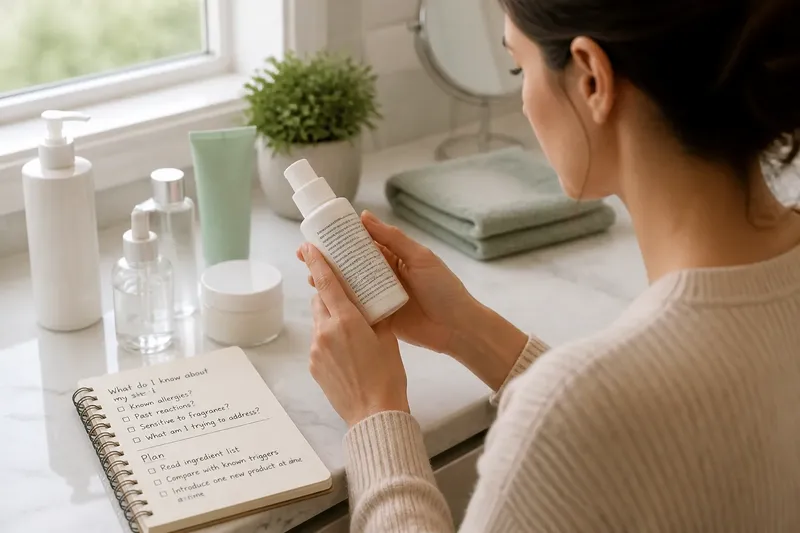
The useful question is not simply “Is it hypoallergenic?” It is “What do I already know about my skin, and what decision am I making?” Let the answer shape how much weight you give the label.
- If you have a diagnosed allergy: Treat the label as background information, not clearance. Compare the full ingredient list with the specific substances you have been told to avoid. If a label or ingredient name is unclear, ask your allergist or dermatologist for help interpreting it.
- If a product has caused a reaction before: Do not assume a hypoallergenic version will be fine. Check whether the formula contains the suspected trigger, and consider discussing the reaction with a qualified clinician, especially if it was severe or keeps returning.
- If your skin is easily irritated but you have no known allergy: The label may help narrow a search, but it cannot settle the choice. Consider the whole formula and how your skin tends to react to fragrance, exfoliating ingredients, or other products you already recognize as troublesome.
- If you are buying for someone else: Ask about known allergies and sensitivities instead of relying on the package claim. A product that suits your preferences may not suit their history.
- If you have no known sensitivity and are curious about a new product: Treat the label as one small clue. Choose based on the product’s intended use and your own prior experience, then introduce it cautiously rather than changing several products at once.
Say you have previously reacted to a scented face lotion and are choosing a new moisturizer. A hypoallergenic claim alone would not answer whether the new formula contains a substance relevant to that reaction. You could compare its ingredient list with the information you already have, set aside the product if the match is uncertain, and ask a clinician when the reaction history warrants it.
Read beyond the front
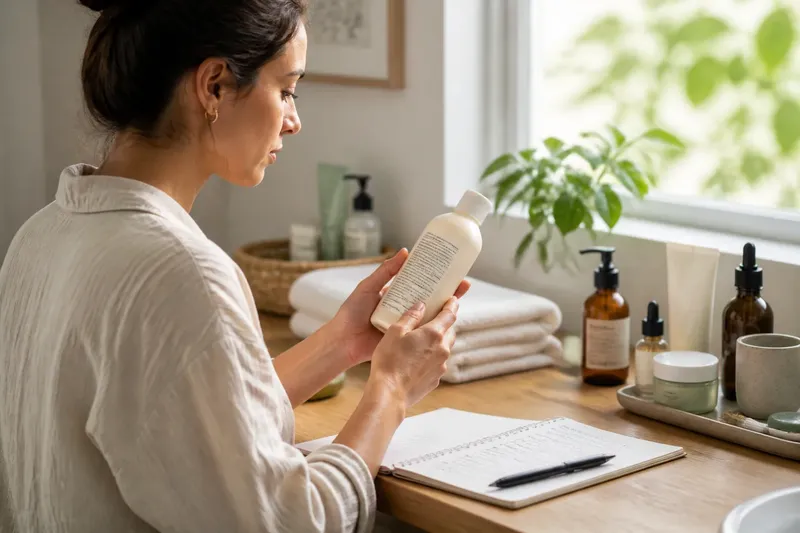
Turn the package over and inspect the ingredient list rather than relying on a reassuring badge or a short phrase near the product name. Look for ingredients you already know you need to avoid; do not assume that “hypoallergenic” means fragrance-free, preservative-free, or free of every ingredient that can bother sensitive skin.
Also distinguish a product claim from an ingredient fact. “Fragrance-free” is a more specific description of the product’s fragrance status than “hypoallergenic,” but it still does not mean that the formula cannot cause irritation or an allergic response. “Unscented” can describe a product without a noticeable scent and does not, by itself, tell you everything about its ingredients. Check the wording and ingredient list rather than treating these terms as interchangeable.
When the package does not explain the claim, a brand’s product page or customer-care team may provide more context. Useful questions include what the brand means by hypoallergenic and whether it can identify the ingredients relevant to your concern. A broad answer that simply repeats the front-label wording adds little.
Introduce a new formula
If you have no known allergy and decide to try a product, keep the first use simple. Follow the product’s directions, avoid introducing several unfamiliar formulas at once, and pay attention to what happens where you apply it. This makes it easier to recognize a possible connection than changing your entire routine together.
A small-area trial can be a cautious screening step for some products, but it cannot rule out a reaction later or predict how a product will behave on every part of your face or body. For a known allergy, a history of serious reactions, or uncertainty about whether a product is appropriate, personal advice from a qualified health professional matters more than an informal trial.
If you develop swelling, blistering, intense pain, or breathing difficulty, stop using the product and seek appropriate medical care; breathing difficulty calls for urgent help. For less severe but persistent or recurring symptoms, a dermatologist or other qualified clinician can help assess possible causes. Do not keep applying a product just to see whether the reaction settles.
Questions readers ask?
Does hypoallergenic mean fragrance-free?
No. The term does not establish that a product has no fragrance. Check the specific product description and ingredient list for that information.
Can hypoallergenic products still cause a reaction?
Yes. A person can react to an ingredient in a product carrying that claim, and irritation is possible too. The label cannot predict an individual response.
Is hypoallergenic better for sensitive skin?
It may help you shortlist products, but it is not a complete measure of suitability. Your known triggers, previous reactions, and the full formula are more informative for an individual decision.
Should I trust a product labeled allergy-tested?
That phrase does not automatically explain who evaluated the product, what was assessed, or whether the result applies to you. Look for the brand’s explanation, and do not treat the wording as personal medical clearance.
Keep the claim in scale
Hypoallergenic skincare is best understood as a marketing description with limited reach, not a promise that a product will agree with every user. For a known allergy, use the specific information you have and seek clinical guidance when needed. For general sensitivity, consider the formula and your own history. For an ordinary new-product choice, let the claim inform your shortlist, not make the decision for you.
When you search for hypoallergenic skincare, look for a product whose ingredients and stated purpose fit your situation—not just a label that sounds reassuring. The most useful choice is the one you can assess with the information available, while staying ready to stop using it if your skin reacts.